How to Start a Food or Beverage Product Business (Without Making Costly Beginner Mistakes)
Feb 15, 2026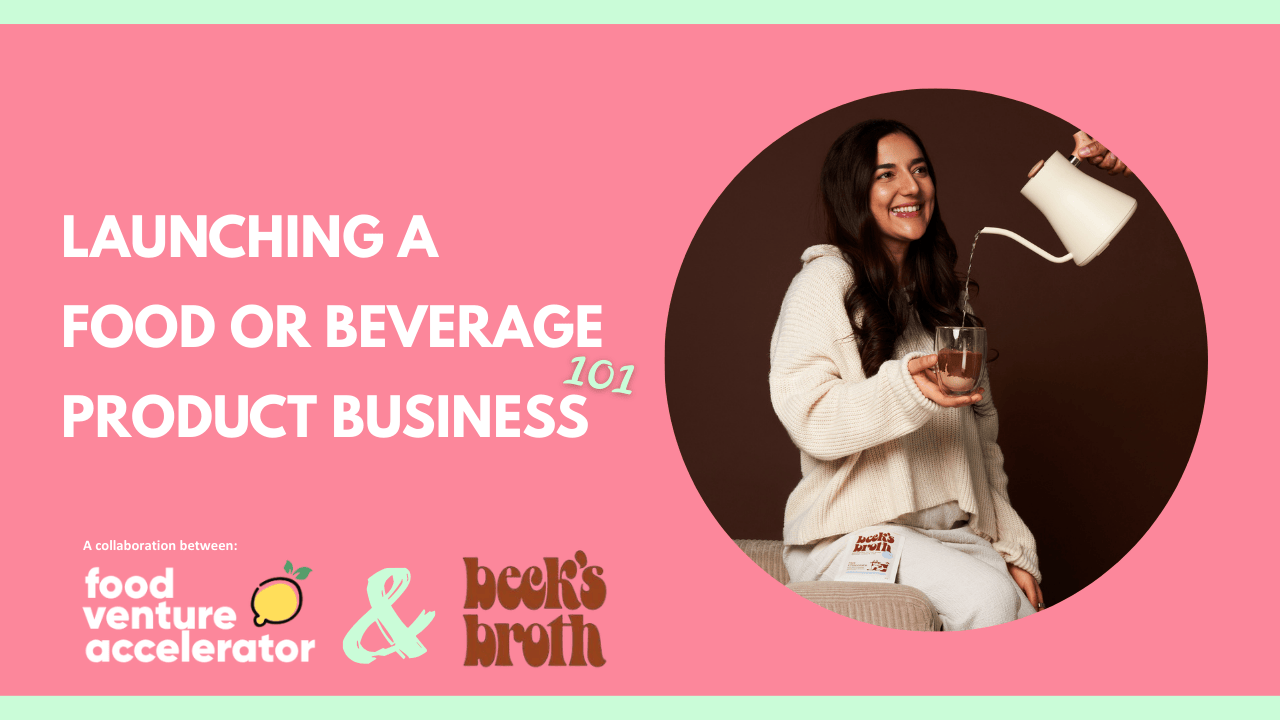
Many food businesses don’t fail because the product is bad.
Over 80% of food product businesses fail because they fail to meet "product market fit". In other words, they launched something that not enough people actually wanted. Another high failure rate is because the founder enters a highly regulated manufacturing industry thinking it works like a typical small business.
A food brand is not just a passion project, a farmers market booth, or a recipe people love it is a supply chain, an operations system, and a retail product all at the same time.
We see this constantly at Food Venture Accelerator. Founders often come to us after they have already invested thousands into packaging, labels, or inventory only to discover they skipped a critical early step.
This guide will walk you through the real foundations of starting a food or beverage business. And throughout, we’ll reference how our on-demand course Launching a Food or Beverage Product Business 101, taught by Domenique Mastronardi, President of Beck’s Broth, goes deeper and shows how these steps are actually executed in a real company that successfully scaled to national distribution.
1. Setting Up a Food Product Business
The first surprise for most founders:
You are not starting a “small business.”
You are starting a regulated food manufacturing company.
Before producing anything, you must determine:
• What legal category your food falls under
• Where it is allowed to be produced
• Whether it can be made at home
• Shelf-stable vs refrigerated requirements
• Inspection or licensing requirements
Skipping this stage is the number one reason founders end up reprinting packaging or reformulating products.
Inside Launching a Food or Beverage Product Business 101, Domenique walks through how she navigated this exact stage with her own company — including when production had to shift and how understanding regulatory requirements early prevented costly mistakes. The course gives founders a practical roadmap so they don’t learn these lessons the expensive way.
2. Keys to a Successful Food Business
Many founders believe success comes from a great recipe.
In reality, success comes from a repeatable system.
Retail buyers don’t primarily evaluate taste, they evaluate reliability. They need products that:
• are consistently produced
• maintain margin
• restock reliably
• sell repeatedly
A product that sells once is interesting.
A product that sells weekly becomes a permanent shelf item.
Domenique shares in the course how operational consistency, not just product quality is what allowed Beck’s Broth to grow without paid advertising and still achieve national distribution. Seeing how an actual founder structured production and operations is often what makes this concept “click” for new entrepreneurs.
3. Achieving Product-Market Fit
This is where most food businesses quietly stall.
Founders often create a product they personally love and then try to market it into existence.
Product-market fit is the opposite approach.
It means customers immediately understand:
• what the product is
• why they want it
• and they come back to buy it again
Signs you truly have product-market fit:
• stores reorder without reminders
• customers explain the product to others
• repeat purchases happen naturally
In the course, Domenique breaks down how her product positioning evolved and how understanding the actual customer changed how the product was presented and sold. This real-world example helps founders see that product-market fit is rarely accidental, it’s discovered through deliberate testing.
4. How to Keep Up With Food Trends
Many founders try to follow trends they see in stores.
But by the time a product is on shelves, the trend is already mature.
Successful brands don’t follow food trends they follow consumer behavior.
Food trends usually begin with:
• lifestyle changes
• health concerns
• cultural adoption
• convenience needs
The key question becomes:
What problem is the customer trying to solve when they buy food?
Inside the course, Domenique explains how understanding the customer’s real motivation helped her product stand out in a competitive category. Hearing how an experienced founder interpreted market behavior gives much clearer direction than simply reading trend reports.
5. Regulatory: Labeling & Where You Can Produce
This is the step that surprises founders the most.
Food labeling is not optional and not flexible.
You must determine:
• mandatory label information
• nutrition facts requirements
• allergen declarations
• ingredient order rules
• shelf life validation
• approved production facilities
Incorrect labeling alone can stop a retailer from carrying your product even if the buyer wants it.
In Launching a Food or Beverage Product Business 101, Domenique walks through how labeling and production decisions affected scaling her own product, and what she would do earlier if starting again. Founders often say this section alone prevents months of costly setbacks.
6. Typical Startup Costs
Another misconception:
Most founders think startup costs are ingredients and packaging.
In reality, early costs often include:
• nutritional analysis
• lab testing
• insurance
• packaging minimums
• certifications
• retail materials
• scaling production
The biggest financial mistake beginners make is producing large inventory before confirming demand.
The early stage of a food brand is not about manufacturing it is about learning quickly and reducing risk.
Domenique shares in the course how she paced production and growth in order to scale sustainably. Seeing how an experienced founder handled early financial decisions helps new entrepreneurs avoid tying up thousands of dollars in unsold inventory.
Why Learning First Saves Money Later
Food entrepreneurship is an incredible opportunity but it is also one of the most operationally complex small businesses someone can start.
Most costly mistakes happen at the beginning, before founders understand how retail, regulation, and manufacturing intersect.
That is exactly why we created:
Launching a Food or Beverage Product Business 101
This on-demand course is designed to show not only what to do, but how it actually works in practice, taught through the real experiences of Domenique Mastronardi and the growth of Beck’s Broth.
If you are considering selling your product beyond friends, markets, or small batches, learning the system first will save you significant time, money, and frustration.
Because in food businesses, the difference between a hobby and a brand is rarely the recipe it’s understanding the industry before you enter it.